
Introduction
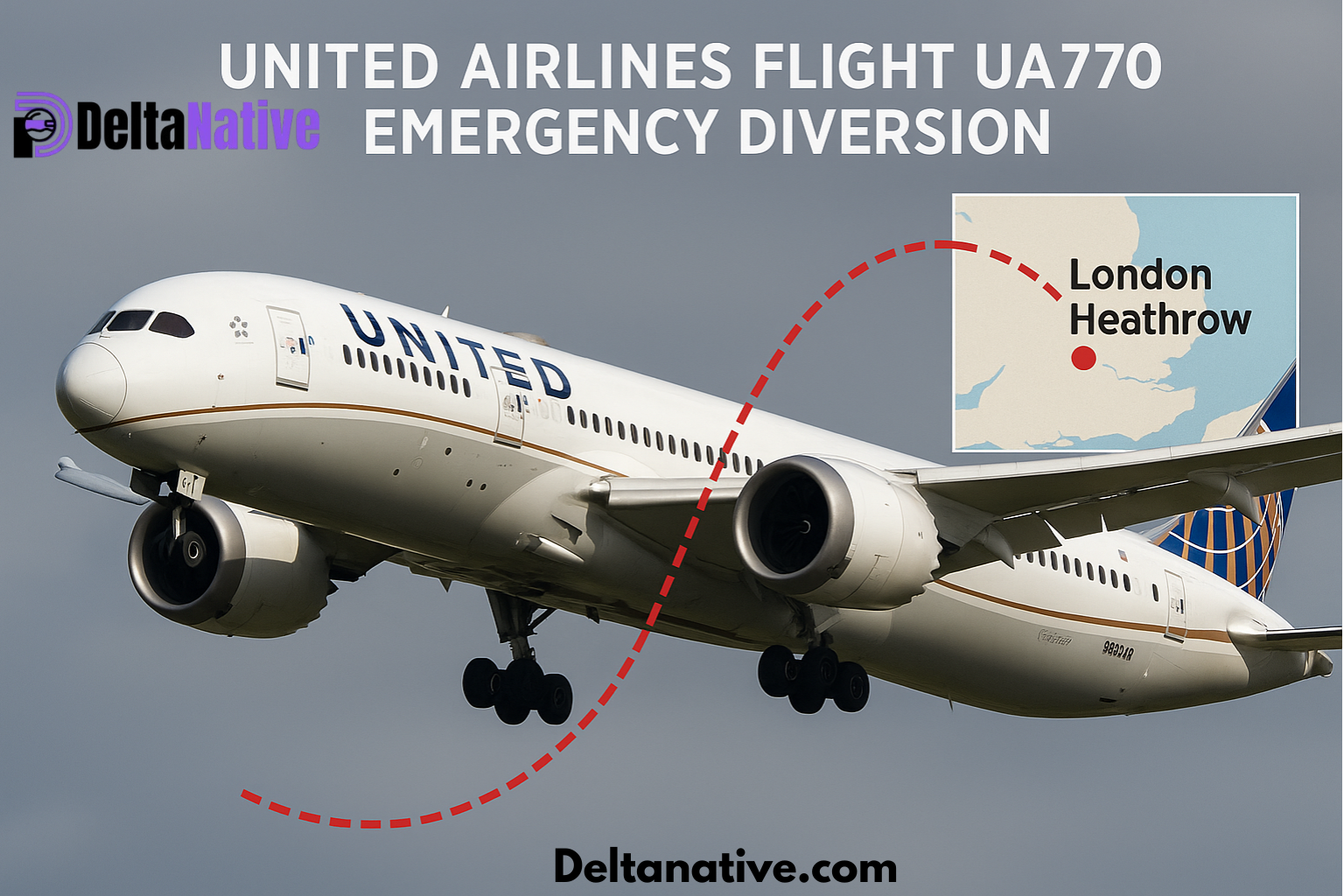
Air travel is one of the safest modes of transportation, but even in modern aviation, unforeseen situations can arise mid-flight. Such was the case with United Airlines Flight UA770, a Boeing 787-9 Dreamliner operating from Barcelona (BCN) to Chicago (ORD), when it was forced to declare an emergency and divert. The incident, widely reported in aviation news circles, underscores the importance of robust safety protocols, well-trained crew, and swift decision-making in the skies.
In this article, we’ll take a deep dive into the United Airlines Flight UA770 emergency diversion, explore the sequence of events, possible causes, crew response, passenger impact, and lessons the industry can draw from it.
Overview of Flight UA770
United Airlines Flight UA770 was scheduled as a long-haul transatlantic service between Spain and the United States. The aircraft involved—a Boeing 787-9 Dreamliner—is known for its fuel efficiency, passenger comfort, and advanced avionics.
- Flight route: Barcelona to Chicago
- Date of incident: [Recent Event]
- Aircraft type: Boeing 787-9 Dreamliner
- Emergency declaration: Squawk code 7700, signaling a general emergency to air traffic control
- Diversion airport: London Heathrow (LHR)
Declaring a “squawk 7700” is the aviation equivalent of activating hazard lights and sirens—it alerts controllers and nearby aircraft that immediate priority handling is required.
Sequence of Events
Shortly after departure from Barcelona, while en route over Europe, the flight crew detected a technical issue. Reports suggest it could have been linked to cabin pressurization or another critical system alert, though official confirmation is pending.
The cockpit crew:
- Assessed the situation in line with United Airlines’ emergency operating procedures.
- Declared an emergency to air traffic control.
- Requested priority diversion to the nearest suitable airport capable of handling a wide-body aircraft—London Heathrow.
Why London Heathrow Was Chosen
Choosing a diversion airport involves several factors:
- Proximity: Heathrow was close enough to minimize time spent in the air under emergency conditions.
- Infrastructure: Heathrow is one of the best-equipped airports in the world for handling unscheduled landings.
- Support Services: Access to United’s ground staff, engineering crews, and passenger services ensured a smoother transition post-landing.
Upon arrival, UA770 landed safely on runway 27R and taxied to a designated gate for inspection.
Step-by-Step: How Airlines Handle In-Flight Diversions
For passengers and observers, an emergency diversion can seem chaotic, but in reality, it follows a clear process.
Step 1 – Problem Identification
The flight crew monitors aircraft systems continuously. If an anomaly occurs, they assess its severity using checklists.
Step 2 – Communication
Pilots inform air traffic control using the transponder emergency code (7700) and establish priority landing arrangements.
Step 3 – Passenger Safety Briefing
Cabin crew inform passengers of the diversion while maintaining calm and order.
Step 4 – Landing and Inspection
The aircraft is landed at the selected diversion airport. Ground crews and emergency teams stand by.
Step 5 – Passenger Support
Airlines arrange rebooking, hotel accommodations, and meals as needed while technical teams investigate.
Pro Tip: If you ever experience a diversion as a passenger, follow crew instructions promptly and remain seated with your seatbelt fastened.
Passenger Impact and Airline Response
According to passenger accounts, the cabin crew remained composed, offering reassurance and regular updates throughout the incident. Upon landing:
- United Airlines provided assistance with rebooking flights to Chicago.
- Those requiring overnight stays were accommodated in hotels.
- Meal vouchers and transportation were arranged for affected travelers.
This swift passenger care minimized disruption and maintained trust in the airline’s handling of emergencies.
Lessons Learned from the UA770 Incident
The United Airlines Flight UA770 emergency diversion reinforces several aviation safety principles:
- Preparedness saves lives: Continuous crew training ensures quick, effective decision-making.
- Communication is critical: Clear information from the cockpit to passengers prevents panic.
- Infrastructure matters: Choosing an airport like Heathrow ensures the availability of advanced emergency and maintenance facilities.
Conclusion
The incident involving United Airlines Flight UA770 serves as a textbook example of aviation safety in action. From the crew’s immediate recognition of a problem to the smooth diversion and safe landing, the process reflects the robustness of modern airline safety protocols.
While diversions may cause inconvenience, they are ultimately about one priority—getting everyone safely on the ground.
FAQs
1. What caused the UA770 diversion?
The official cause has not been confirmed, but early reports suggest a possible technical system issue.
2. Was anyone injured during the diversion?
No injuries were reported. The crew handled the incident professionally, ensuring passenger safety.
3. What does “squawk 7700” mean?
It’s the transponder code used to signal a general emergency to air traffic control.
4. Why didn’t the flight continue to Chicago?
Continuing would have posed unnecessary risk. Heathrow was the closest suitable airport.
5. How does United Airlines support passengers after such incidents?
They typically provide rebooking, hotel stays if needed, meals, and updates until passengers can continue their journey.
