
Meaning, Clinical Context, Benefits, Drawbacks, and Everyday Relevance of CID10M545
Introduction
CID10M545 is a medical coding term that frequently appears in health records, clinical notes, and administrative documents related to musculoskeletal complaints. Although it may look complex at first glance, this code plays a practical role in describing one of the most common physical problems experienced by people of all ages: low back pain. Understanding CID10M545 helps bridge the gap between medical language and everyday experience.
Low back pain affects daily movement, work productivity, and overall quality of life. CID10M545 exists to organize this condition within healthcare systems in a clear and consistent way. This article explains the meaning, usage, strengths, and limitations of CID10M545 in a structured, human-readable, and informative manner without adding unsupported details.
What Does CID10M545 Mean?
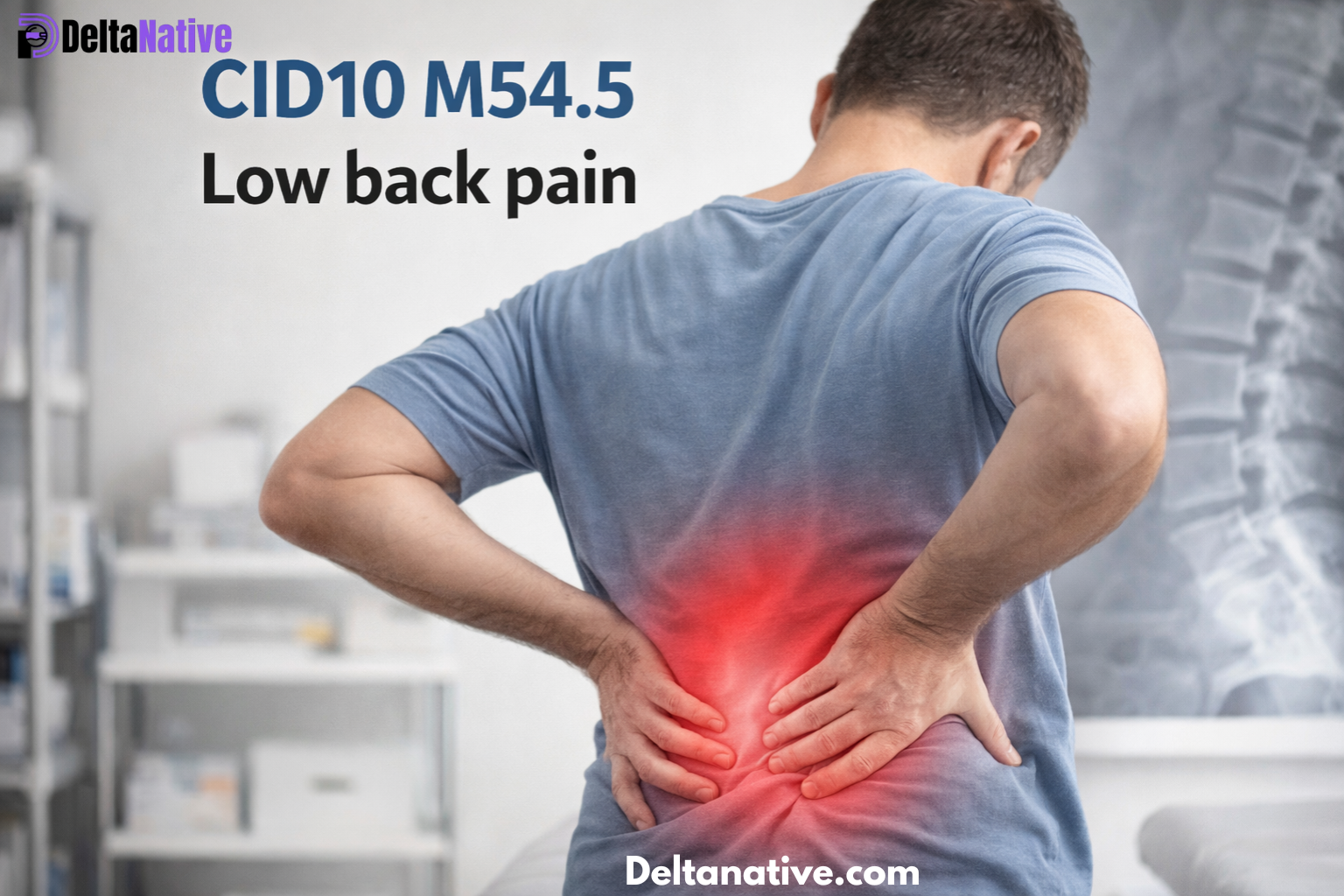
CID10M545 is a classification used within the ICD-10 medical coding framework to describe pain located in the lower back, also known as the lumbar region. The code focuses on the presence of pain rather than identifying a specific disease or injury.
This approach allows healthcare professionals to record a patient’s symptoms accurately even when the exact cause of the pain is not yet clear. CID10M545 serves as a practical label that communicates the primary issue without assumptions.
Clinical Context of CID10M545
In clinical settings, CID10M545 is commonly used when a patient reports discomfort or pain in the lower back area. This pain may appear suddenly or develop gradually over time.
Why Clinicians Use This Code
Low back pain can result from many everyday factors such as posture, physical strain, or repetitive movement. CID10M545 allows clinicians to document the symptom quickly and begin management or observation without delay.
Symptoms Commonly Associated With CID10M545
CID10M545 is linked to symptoms that affect the lumbar spine and surrounding muscles. These symptoms vary in intensity and duration from person to person.
Common symptoms include:
- Aching or sharp pain in the lower back
- Stiffness that limits movement
- Discomfort during bending or lifting
- Pain after long periods of sitting or standing
The code does not imply pain spreading to the legs or nerve involvement. It remains focused on the lower back region itself.
How CID10M545 Is Used in Healthcare
CID10M545 appears across different areas of healthcare due to the widespread nature of low back pain.
Use in Medical Documentation
Healthcare providers use the code to ensure patient records clearly reflect the reason for consultation. This consistency supports communication between doctors, therapists, and other professionals.
Use in Administrative Processes
CID10M545 also supports health system organization by allowing data related to back pain to be grouped, analyzed, and managed efficiently.
Positive Aspects of CID10M545
One major advantage of CID10M545 is its simplicity. It provides a clear way to describe a common symptom without requiring detailed diagnosis at an early stage.
Another positive aspect is its flexibility. The code can be used across many care settings, from primary care to physical therapy, making it widely applicable.
Negative Aspects and Limitations
Despite its usefulness, CID10M545 has clear limitations. The most significant drawback is that it does not explain the cause of the pain. It only records that pain exists.
This means additional assessment may be needed if symptoms persist. In such cases, more specific medical codes are often used to describe underlying conditions more accurately.
CID10M545 and Patient Understanding
For patients, seeing CID10M545 in medical paperwork can raise questions. Understanding that it simply refers to low back pain can reduce confusion and unnecessary concern.
What the Code Does Not Mean
CID10M545 does not automatically indicate a serious or long-term condition. It is a descriptive term, not a prediction or diagnosis of severity.
Role of CID10M545 in Modern Medical Coding
Medical coding systems aim to balance clarity and flexibility. CID10M545 represents this balance by offering a broad category that fits many real-world situations.
Why Broad Codes Still Matter
While more detailed codes exist, broad classifications like CID10M545 remain important because they reflect how symptoms often appear before causes are fully understood.
Semantic Interpretation of CID10M545
From a semantic perspective, CID10M545 functions as a neutral descriptor. It communicates what is known without adding interpretation or judgment.
This neutrality helps healthcare providers avoid over-labeling conditions and supports a step-by-step approach to care.
Everyday Impact of Low Back Pain Coding
Low back pain is one of the most frequent reasons people seek medical help. CID10M545 helps ensure these cases are recorded consistently, supporting better organization of healthcare services.
Over time, this consistency helps health systems understand patterns, workload, and resource needs related to back pain management.
Conclusion
CID10M545 provides a deep and practical way to classify low back pain within medical coding systems. Its strength lies in clarity, flexibility, and ease of use across healthcare settings. By focusing on the symptom rather than the cause, it allows care to begin while leaving room for further evaluation.
At the same time, its limitations remind us that medical codes are tools, not full explanations. When understood correctly, CID10M545 supports both healthcare professionals and patients by offering a clear starting point in the management of low back pain.
Frequently Asked Questions (FAQ)
What is CID10M545 used for?
CID10M545 is used to describe pain located in the lower back region in medical records.
Is CID10M545 a final diagnosis?
No, it identifies a symptom rather than a specific underlying condition.
Why is CID10M545 commonly seen in health records?
Low back pain is very common, and this code provides a simple way to document it.
Does CID10M545 indicate long-term back problems?
Not necessarily. It only notes the presence of low back pain at a given time.
Can CID10M545 be replaced with another code later?
Yes, if further assessment identifies a specific cause, a more detailed code may be used.
