
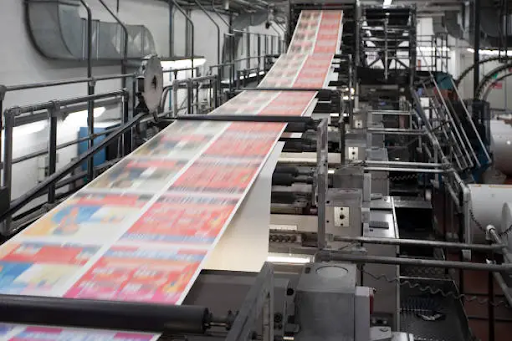
Rotary Press Technology in B2B Printing
As the B2B printing and packaging industries undergo rapid transformation, there is constant emphasis on investing in equipment guaranteed to improve operational efficiency, quality, and lower costs.
One such cutting-edge solution is the rotary press where printing is achieved at high speeds in a continuous manner on varied substrates such as paper, cardboard, and flexible packaging materials.
With a relentless focus on quality, KETEGROUP earns unparalleled recognition as the standard setter for rotary printing and flexo printing solutions for high-volume, precise, and high-speed operations. There is a full catalog of KETEGROUP flexo printing machines designed for industrial scale B2B applications.
Production line integration with rotary press technology results not only in increased productivity but also in the reliability of the token high quality outputs. This is the cornerstone for winning competitive advantage in the modern marketplace where precision, speed, and reliability are paramount.## Advantages of Rotary Press for B2B Operations
B2B companies find there is considerable value added when rotary press systems are adopted, and there is more than material printing involved. From an operational profitability and customer satisfaction perspective, there are distinct improvements in:
- High-Speed Production: Rotary presses can operate for extended periods of time and at high speeds, which allows businesses to satisfy large volumes of orders on time.
- Consistent Print Quality: While rotary presses cannot guarantee no reprints, they do ensure that errors and reprints of low value copies are minimized to help the customer.
- Cost Efficiency: Reduction of operational costs is achieved when rotary presses are able to reduce the volumes of material wastage and decrease the workload.
- Versatility Across Substrates: The presses can print on a number of materials, such as thin paper, thick cardboard, and flexible films, which is useful for various B2B printing needs.
- Enhanced Workflow Integration: Streamlining of production processes is achieved when rotary presses are able to interconnect with systems like laminators, cutters, and finishers.
These are the principal reasons why rotary press machines are considered vital for industries like packaging, publishing, and commerce printing.
Applications of Rotary Press Across Industries
The rotary press can be used in a wide variety of fields, meeting what is functional and what is aesthetic in these B2B sectors:
- Packaging Industry
When it comes to manufacturers of boxes, cartons, and flexible packs, rotary presses can provide great quality prints in multiple vivid colors and complex, intricate designs, with perfect registration and low wastage. The incorporation of protective laminations and coatings at later stages allows greater longevity of packs and boosts shelf-appeal. - Label Printing
Labeling rotary presses is used by prodigious label artisans to print label stickers at high speeds with great accuracy. This spans from labels on consumer goods to industrial label printing and stickers and meets the goals of branding and regulation. - Publishing Sector
Rotary presses produce magazines, catalogs, and advertising brochures in great quantity and at high speed. Continuous press systems with the right inking systems on rotary presses, print at the highest quality while meeting demand on time. - Commercial and Promotional Printing
Commercials, banners, and other marketing materials in bulk and high quality need the speed and accuracy of rotary presses, especially autotaping systems. - Industrial and Technical Printing
Durable rotary presses easily print technical order packs, instruction guides, compliance packs, and other specialty products like high-quality decals and tags.
The rotary presses allow a greater flexibility and performance that demonstrates the critical role in B2B printing that have high volume and high quality non-negotiables.
Main Points when Selecting a Rotary Press
Choosing a rotary press for B2B will boil down to considering production needs, technical specifics, and what the business hopes to achieve. The most important points to keep in mind include.
- Total Production for Each Cycle
Every business has to look at what their target diagonals are for daily production and what their target maxima capacity should be for production. Press instances of heavy industry will need to acquire heavy duty presses with continual running capabilities and no down time in order to achieve those goals.
- Compatibility with Various Substrates
Substrates compatible with the rotary press need to be evaluated. Companies who produce different formats of secondary packaging will find value in rotary presses that can work with a variety of flexible film, special substrates, paper and board materials.
- Control and Degree of Automation
Like other more modern presses, those from KETEGROUP allow for the automated setting of various parameters such as speed and flow. This leads to less mistakes and improved productivity in the general workflow.
- Availability of Parts and Support
Consistent uptime means the access to spare parts for rotary press machines, technical assistance and the parts themselves needs to be seamlessly available. This in turn will prolong the rotary press s reliability in the long run.
- Operating Costs vs. Environmental Conservation
Businesses that buy B2B machines, whether through KETEGROUP or other manufacturers, need to be aware of the importance of machines that are energy efficient as the operating costs will be less spending and the goals of the business in relation to conserving energy will be fulfilled.
The decisions made based on such factors will help companies find rotary presses which not only streamline operational costs and energy consumption, but also elevate the value and purpose of the business with time.
KETEGROUP: The Leader in Rotary Press Solutions
KETEGROUP has gained a reputation for extensive experience in working with industrial-grade rotary presses as a dependable partner for B2B businesses. Their machines are designed to meet the rigorous requirements for volume printing and quality printing.
What makes KETEGROUP rotary presses truly stand out:
- Sophisticated Equipment: All machines at KETEGROUP are fitted with intelligent control ensuring precision printing, automated control of tension, and even control of the ink.
- Various Production Levels: Machines are available for bespoke B2B requirements on medium and large production levels.
- B2B Flexibility: Substrates, unique coatings, and specialty packages can all be customized to B2B requirements.
- Trust-Worthy B2B Printer: Industrial printing and packaging has made KETEGROUP a trusted business B2B printer all over the globe.
- Maximized ROI: ROI is maximized when parts technical consultation, spare parts, and maintenance services which reduce downtime are considered.
It is strategically advantageous for B2B businesses to explore rotary presses from KETEGROUP for an enhancement in the printing capability.
https://www.ketegroup.com/es/product-category/flexo-printing-machines/ for more information.
Conclusion
In the B2B world, rotary presses have made a distinct change in the printing and packaging B2B world. The machine’s combination of petrifying substrate, speed, and quality gives a company more benefits strategically and operationally.
For any business, investing in new rotary press machinery is crucial to cutting down on waste, optimizing workflows, completing production on schedule, and achieving “A” quality output. Access to cutting-edge printing features, along with other KETEGROUP perks, ensures that a business has the technology and support needed to thrive in tough competitive B2B environments.
For B2B firms, having a rotary press ensures that operational efficiency is achieved, along with an improved brand image and competitive advantage in the industrial printing and packaging sector.
